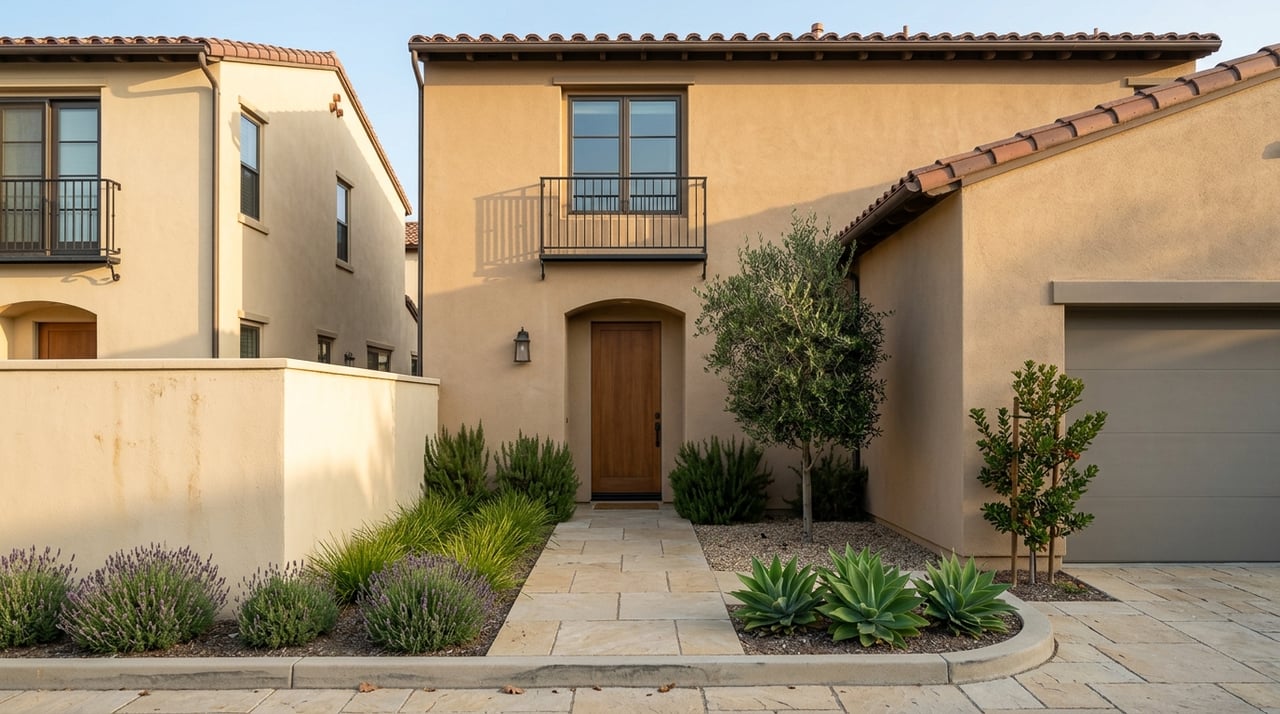
Looking for a home that gives you more freedom and less weekend upkeep? In Folsom, condos and townhomes can be a smart fit if you want comfort, convenience, and access to amenities without taking on all the maintenance that often comes with a detached house. If you are weighing your options in this part of Greater Sacramento, understanding how attached living works in Folsom can help you make a more confident move. Let’s dive in.
Why attached living stands out in Folsom
Folsom’s condo and townhome market is active, but it is still a relatively small slice of the overall housing picture. Redfin currently shows 31 condos for sale in Folsom with a median listing price around $448,000, while Realtor.com currently shows just 2 townhomes for sale at $585,000 and $625,000.
That smaller inventory matters because it means attached homes in Folsom can feel more community-specific than broad-market. Instead of one uniform condo experience, you are often choosing between a handful of distinct developments with different layouts, HOA structures, and amenity packages.
Redfin also describes Folsom as minimally walkable overall, with a Walk Score of 31. So if you are considering a condo or townhome here, you are likely choosing it for low-maintenance living, location convenience, and community amenities, not for a dense urban, car-free lifestyle.
Where condos and townhomes are common
Attached homes in Folsom tend to cluster in a few well-known areas. Redfin’s condo market data points to places like Broadstone, Empire Ranch Village, the Folsom Historic District, American River Canyon, and Briggs Ranch as common condo pockets.
Current listings also show a clear local pattern. Many condos and townhomes are positioned near Palladio, Highway 50, shopping, dining, and trail access, which can make daily routines simpler if you want easier access to errands, commuting routes, or outdoor recreation.
That is one of the biggest appeals of attached living in Folsom. You may give up lot size and private yard space, but you often gain a location that supports a more streamlined day-to-day lifestyle.
What floor plans look like in Folsom
Folsom’s attached-home inventory covers a wide range of sizes and layouts. Current and recent listings show homes ranging from about 750 to 2,073 square feet, with 1 to 3 bedrooms being the most common setup.
In communities like Altura Villas on Halidon Way, smaller one-bedroom condos around 750 square feet are part of the mix. Larger layouts in the same community can reach about 1,267 square feet and may include features like a downstairs primary bedroom, upstairs secondary bedrooms, balconies, and a 2-car attached garage.
Other communities offer a different style. Madrone at Empire Ranch, for example, shows a common Folsom condo format with an open-concept 2-bedroom, 2-bath layout at around 1,018 square feet, paired with in-unit laundry, a private balcony, and a detached one-car garage.
Townhomes are generally larger and can feel closer in size to a smaller detached house. Current examples on Realtor.com include 3-bedroom, 2-bath townhomes measuring 1,960 to 2,073 square feet, which may appeal if you want more room but still prefer an attached-home setup.
Amenities vary more than you might expect
One of the biggest surprises for buyers is how different Folsom’s attached-home communities can be. Some developments offer a long list of shared amenities, while others keep things simple and focus more on the home itself.
At Altura Villas, listings describe amenities such as a clubhouse, fitness center, pool and spa, play structure, park, basketball court, and BBQ area. That kind of setup can feel especially appealing if you want recreation and social spaces nearby without maintaining them yourself.
Vessona is another example of a more amenity-rich option. Recent listings mention features like a pool, fitness room, dog park, clubhouse, and spa, along with larger low-maintenance layouts, including some single-story or ground-floor homes.
On the other hand, not every attached community in Folsom includes shared extras. A current listing in Outlook at Treehouse notes no association amenities, but still offers attractive in-home features like an open-concept kitchen, upstairs laundry, an oversized primary suite, and an attached garage.
The takeaway is simple: do not assume every condo or townhome comes with the same lifestyle package. In Folsom, the details can vary a lot from one community to the next.
Understanding HOA living in California
If you are buying a condo or townhome in Folsom, the HOA deserves close attention. According to the California Attorney General, homeowners associations generally require membership, dues, and compliance with community rules, with rights and responsibilities outlined in governing documents such as CC&Rs and bylaws.
In California, the Davis-Stirling Act is the main law that governs HOA elections, finances, maintenance responsibilities, and dispute resolution. That legal framework matters because HOA rules are not just informal guidelines. They can affect how the community is maintained, how decisions are made, and what owners are responsible for.
The California Department of Real Estate also notes that in a true condominium, owners generally own only the air space inside the common walls, while the governing documents define what the association maintains. In planned developments, owners may carry more responsibility for exterior and structural items.
That distinction can shape your monthly costs and your day-to-day ownership experience. Two attached homes at similar price points can come with very different responsibilities depending on how the community is structured.
What HOA dues may cover
In Folsom, HOA dues are not just an extra line item. They often cover services and maintenance costs that detached-home owners would typically pay separately.
A recent Altura Villas listing showed a $382 monthly HOA fee that included common areas, pool, recreation facilities, sewer, trash, exterior maintenance, ground maintenance, and management. A recent Vessona sale showed $550 monthly HOA dues that covered water, sewer, garbage, exterior maintenance, grounds, roof, and recreational facilities.
This is where attached living can become attractive for the right buyer. If you value less yard work, fewer exterior repair demands, and easier travel or lock-and-leave flexibility, those dues may support a lifestyle that feels easier to manage.
At the same time, HOA living also means community rules, shared walls, and the possibility of special assessments if reserves are not strong enough. That is why reviewing the HOA documents is one of the most important parts of buying a condo or townhome.
Reserve studies matter more than many buyers realize
California law requires HOA boards to stay on top of major common-area maintenance planning. Under California Civil Code 5550, an HOA board must perform a reasonably competent visual inspection of major common components at least once every three years, review the reserve study annually, and adopt a reserve funding plan.
For you as a buyer, that matters because reserve planning can affect future costs. A well-funded reserve helps an HOA prepare for major repairs such as roofs, exterior components, or shared facilities. If reserves are weak, owners could face added financial pressure later.
This is why the document package matters so much in an attached-home purchase. The budget, reserve study, CC&Rs, bylaws, and rules can tell you a lot about how the community operates and whether the monthly dues appear to match the services and maintenance obligations involved.
Who condo and townhome living fits best
Attached living is not one-size-fits-all, but in Folsom it tends to work especially well for a few types of buyers. The key is matching the home style to the way you actually want to live.
Downsizers seeking less upkeep
If maintaining a larger property no longer feels worth it, a condo or townhome can offer a simpler routine. Communities like Altura Villas and Vessona show why, with options that may include gated access, clubhouses, pools, fitness spaces, and in some cases single-level or ground-floor living.
For many downsizers, the appeal is not just smaller square footage. It is having fewer exterior tasks and less ongoing maintenance to manage.
Busy professionals prioritizing convenience
Current listings often highlight proximity to Palladio, Intel, Micron, Kaiser, Folsom Lake College, Highway 50, shopping, and dining. If your schedule is full, attached living can offer a lower-maintenance home base near many of the places you use regularly.
That can be especially helpful if you want to spend less time on chores and more time enjoying your home, your routine, or your weekends.
First-time buyers comparing monthly costs
For some first-time buyers, condos can offer a lower purchase price than many detached homes in Folsom. Recent examples place condos from the low $300,000s to mid $400,000s, while current townhomes are in the mid $500,000s to mid $600,000s.
Still, the monthly payment is about more than the price tag. HOA dues, garage setup, parking, included utilities, and maintenance coverage all affect the true cost of ownership.
Folsom adds lifestyle value beyond the front door
Part of the appeal of condo and townhome living in Folsom is what surrounds the community. According to the City of Folsom, residents have access to more than 50 miles of paved trails and 48 parks.
California State Parks also notes that Folsom Lake State Recreation Area sits about 25 miles east of Sacramento and includes a 32-mile bicycle path plus access to Lake Natoma for rowing, paddling, sailing, and other non-motorized or slow-speed recreation.
That means attached living in Folsom can still connect you to plenty of outdoor time. Even if you are not maintaining a large yard, you may still be close to trails, parks, and recreation that support an active lifestyle.
A smart buyer checklist for Folsom attached homes
Before you move forward on a condo or townhome, it helps to compare more than the list price. A few practical questions can help you avoid surprises.
- Confirm what the HOA fee includes, such as water, sewer, trash, roof, exterior maintenance, grounds, insurance on the structure, or recreation facilities.
- Review the CC&Rs, bylaws, rules, budget, and reserve study before making an offer.
- Check garage type, assigned parking, guest parking, and storage availability.
- Look for rental caps, pet rules, gate rules, and any age restrictions that may affect long-term flexibility.
- Compare the HOA cost against the maintenance and utility expenses you may be avoiding.
If you are exploring condo and townhome living in Folsom, the right choice often comes down to your routine, your budget, and how much maintenance you want to take on. A local team can help you compare communities, understand the tradeoffs, and narrow in on the fit that makes the most sense for your next move. For guidance tailored to your goals, connect with Portfolio Real Estate.
FAQs
What is the typical price range for condos and townhomes in Folsom?
- Current market examples show condos around the low $300,000s to mid $400,000s, while current townhomes are in the mid $500,000s to mid $600,000s.
What do HOA fees usually cover in Folsom condo communities?
- Coverage varies by community, but recent listings show HOA dues may include items like water, sewer, trash, roof, exterior maintenance, grounds, common areas, and recreational facilities.
Are Folsom townhomes usually larger than condos?
- Yes. Current examples show many condos under 1,500 square feet, while current townhomes are around 1,960 to 2,073 square feet.
What neighborhoods in Folsom commonly have condos?
- Redfin identifies areas such as Broadstone, Empire Ranch Village, the Folsom Historic District, American River Canyon, and Briggs Ranch as common condo locations.
Is condo living in Folsom a good fit if I want less maintenance?
- It can be, especially if you want to reduce yard work and exterior upkeep, but you will want to balance that benefit against HOA dues, shared walls, and community rules.
What should I review before buying a condo or townhome in Folsom?
- Focus on the HOA documents, including CC&Rs, bylaws, rules, budget, reserve study, and a clear list of what the association maintains and what you are responsible for.