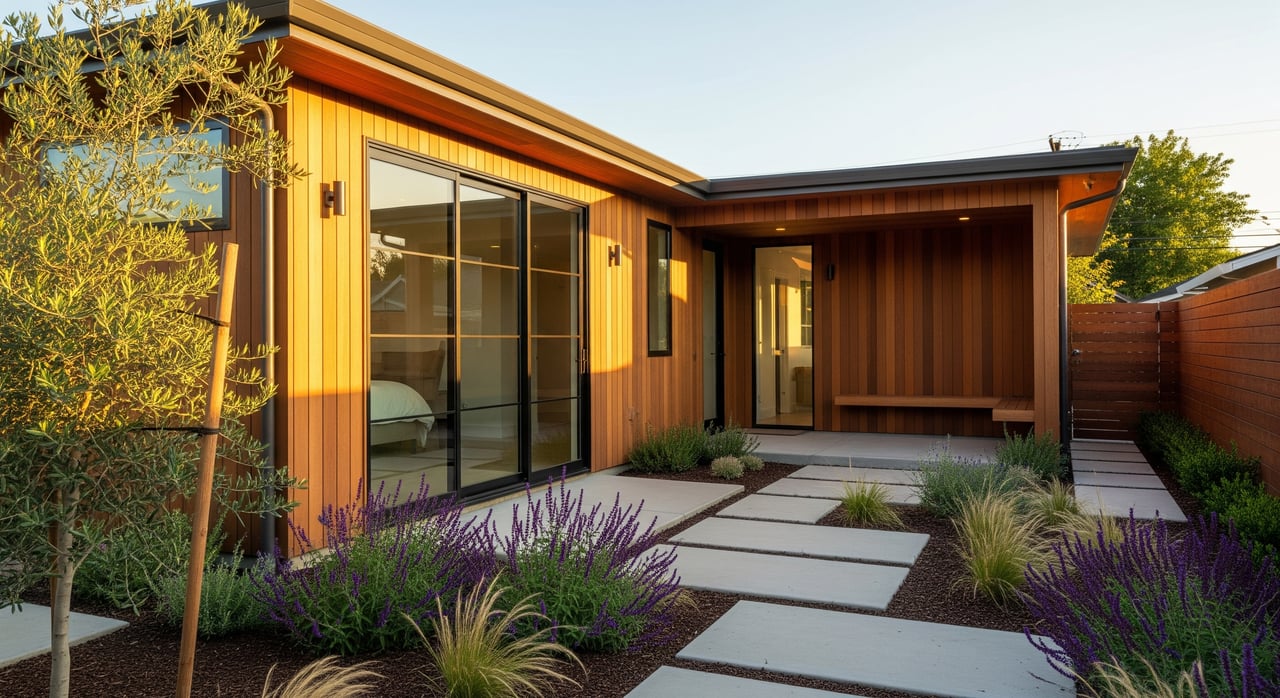
Thinking about adding an ADU to your South Natomas home but not sure what will actually fit your lot? You are not alone. Lot shapes, setbacks, utilities, and even floodplain rules can turn a great idea into a puzzle. In this guide, you will learn the rules that matter in Sacramento, the ADU types that work on suburban South Natomas parcels, smart design moves for tight backyards, and a clear path to permits and utilities. Let’s dive in.
Know the Sacramento rules
State law makes ADUs broadly allowed and requires a ministerial approval within 60 days of a complete submittal for properties with an existing home. You can review the statewide timing and approval standards in California’s ADU statute for context in the Government Code.
The City of Sacramento follows state law and adds local details you should check before you design. Start at the City’s ADU Resource Center. Key local standards include:
- Detached ADUs up to 1,200 sq ft in many cases, with different limits for attached ADUs. See the City’s Plan Step 1 page for specifics.
- Typical rear and interior side setbacks of 3 to 4 feet, plus a 4‑foot separation from other structures.
- Height tied to your zoning (for example, R‑1 often allows up to 35 feet).
- Reduced or exempt parking in many situations, especially near transit, under the City’s updated parking rules.
- Objective design standards that encourage scale and material compatibility, outlined in the City’s ADU design standards.
Read your lot in South Natomas
South Natomas is mostly suburban with a mix of 1980s to newer tracts. Lot sizes vary block by block, so verify your parcel dimensions and zoning before you pick a layout. Many homes have front-facing garages and driveways, which can make garage conversions or above-garage ADUs practical.
Floodplain status matters here. Parts of Natomas fall within mapped flood zones and rely on levees. Check the City’s Natomas flood page to see if your address has elevation or floodproofing implications and to learn about A99 and related designations. Start with the Natomas flood maps.
Transit proximity can influence parking requirements. If you are within a half mile of a major transit stop, City and state rules often reduce ADU parking needs. Confirm your exact status with the City’s ADU Resource Center.
Choose an ADU type that fits
Garage conversion or JADU
Why it works: Many South Natomas homes have attached garages, so converting existing space is efficient and usually the least disruptive. A Junior ADU (up to 500 sq ft within the main home) is another low-impact option.
What to watch: Conversions still need permits, and you may need electrical, plumbing, or structural upgrades. Parking replacement is often not required when a garage becomes an ADU. See the City’s utility and code tips in Additional Considerations.
ADU above a garage
Why it works: Going up preserves yard space and can unlock more square footage on a narrow lot.
What to watch: Second-floor setback rules, structural capacity, and overall height limits apply. Review sizing and setback basics on the City’s Plan Step 1 page.
Detached backyard cottage
Why it works: Offers privacy, flexible floor plans, and a chance to match the main home’s look.
What to watch: Plan for 3–4 foot side and rear setbacks and 4‑foot separation from the primary home, plus stormwater rules if you add more than 500 sq ft of impervious surface. Floodplain requirements may add foundation cost. Start with the City’s Plan Step 1 page and Additional Considerations.
Attached ADU
Why it works: Integrates with the main home and can be an efficient way to add livable area.
What to watch: Attached units have different size caps than detached ADUs and must meet building code and compatibility standards. Confirm your site’s allowances on the City’s Plan Step 1 page.
Small front-yard ADU (special case)
The City allows a single ADU up to 800 sq ft in a front-yard setback under limited conditions. This is a targeted solution when the rear yard will not work. See the tests and limits on the City’s Plan Step 1 page.
Smart design moves for smaller lots
- Start with conversions. Garage or interior conversions are often fastest and most cost-effective.
- Keep detached footprints compact. Studio or 1-bedroom layouts that push massing toward the rear help preserve usable yard.
- Use a “skinny” plan. Depths of about 30 to 45 feet with widths around 16 to 24 feet can fit narrow side yards.
- Protect privacy. Offset windows, add clerestories on side walls, and layer fences and evergreen landscaping.
- Match the main home. Align siding, roof pitch, and colors to meet the City’s objective design standards.
- Manage water onsite. If you add impervious area, consider permeable paving or small rain gardens and review the City’s Additional Considerations.
Permits, timeline, and preapproved plans
By law, the City must approve or deny a complete ADU application within 60 days for properties with an existing dwelling. You can confirm the timing standard in California’s ADU statute.
To speed things up, consider the City’s Preapproved ADU Program. These permit-ready plans still require site checks for setbacks, utilities, stormwater, and any floodplain requirements, but they can shorten review when your submittal is complete.
Utilities, fees, and floodplain steps
- Water, sewer, and stormwater. A detached ADU can tie into existing service or add a separate meter. Extra impervious area can trigger stormwater requirements. See the City’s Additional Considerations.
- Impact fees. Water, sewer, and stormwater fees vary by project scope. Ask the Department of Utilities for an early estimate using the City’s Development Impact Fees page.
- Power and gas. Coordinate early with SMUD and PG&E if upgrades or new meters are likely. Lead times can affect your schedule.
- Floodplain. If your property falls within a Natomas flood zone, foundation elevation and floodplain permits may apply. Start with the Natomas flood maps and the City’s flood contacts.
A simple plan to get started
- Check your parcel zoning, lot dimensions, and flood status using the City’s ADU Resource Center and Natomas flood maps.
- Decide on a type that fits your lot: garage conversion, attached, detached, or above-garage.
- If speed matters, explore the City’s Preapproved ADU Program.
- Map utilities. Locate meters, plan tie-ins, and request a preliminary fee estimate via the City’s Development Impact Fees page.
- Align your design with the City’s objective standards to keep review smooth.
- Prepare a complete submittal so you can take advantage of the 60‑day ministerial review timeline.
Ready to explore what will fit on your South Natomas lot? Reach out to our local team at Portfolio Real Estate for neighborhood‑grounded guidance and a clear plan from design choice to listing strategy if you plan to rent or sell.
FAQs
What are the ADU size limits in Sacramento?
- Detached ADUs can often be up to 1,200 sq ft, while attached ADUs follow different local caps you can verify on the City’s Plan Step 1 page.
How do setbacks work for South Natomas ADUs?
- Sacramento commonly requires 3–4 foot rear and interior side setbacks and a 4‑foot separation from other structures, with height tied to your zoning.
Do I need to provide parking for an ADU near transit?
- Often no, because state and City rules reduce or remove ADU parking requirements near transit and for garage conversions under the City’s updated parking standards.
How long does ADU permitting take in Sacramento?
- By state law, the City must act on a complete application within 60 days when there is an existing home, though utility coordination or floodplain reviews can add time.
Which ADU type fits a smaller South Natomas lot?
- Garage conversions and attached options are usually most space‑efficient, while detached cottages or above‑garage units work when you have rear-yard depth and good access.
What utility and fee costs should I plan for with an ADU?
- Expect water, sewer, and stormwater fees based on project scope, possible new meters for detached units, and potential electrical or gas upgrades depending on load and layout.